Buy brainstation.eu ?
We are moving the project
brainstation.eu .
Are you interested in purchasing the domain
brainstation.eu ?
domain@kv-gmbh.de · 0541-91531010
Buy brainstation.eu ?
What are compulsive disorders, obsessive thoughts, and compulsive actions?
Compulsive disorders are mental health conditions characterized by the presence of obsessive thoughts and compulsive actions. Obsessive thoughts are persistent, intrusive, and unwanted thoughts that cause distress or anxiety. Compulsive actions are repetitive behaviors or rituals that a person feels driven to perform in response to their obsessive thoughts, in order to alleviate the anxiety or distress. These disorders can significantly interfere with daily functioning and can be difficult to control without professional help. **
What is the difference between compulsive tidying and compulsive thinking?
Compulsive tidying is a behavior characterized by an overwhelming urge to constantly clean and organize one's surroundings, often to the point of excess. On the other hand, compulsive thinking involves persistent, intrusive thoughts that are difficult to control and can lead to anxiety or distress. While compulsive tidying is focused on physical actions and organization, compulsive thinking is centered around mental processes and can be more challenging to manage. Both can be symptoms of underlying mental health conditions, such as obsessive-compulsive disorder, but they manifest in different ways. **


Similar search terms for Compulsive
Top-Angebote
Products related to Compulsive:
-
Martin N. Seif PhD Needing to Know for Sure: A CBT-Based Guide to Overcoming Compulsive Checking and Reassurance SeekingDescription. Condition: BRAND NEW. Format: Paperback. Do you have thoughts like these-thoughts that cause you to second-guess yourself, and lead to anxiety, stress, and worry? Do you find yourself repeatedly checking your email for no reason, asking others for their opinions about something again and again, or lying awake at night overgrazing and planning ahead in an attempt to feel less anxious? If so, you probably have a problem with compulsive reassurance seeking. The good news is that you can break free from. Title. Needing to Know for Sure: A CBT-Based Guide to Overcoming Compulsive Checking and Reassurance Seeking. Delivery. Content. Reviews99,99 £*Shipping: 0,00 £Secure redirect to the provider
-
The Readers Paradise Connect To Grow: How To Network With Confidence, Purpose And Authenticity by Shweta Chawla - Non Fiction Paperback - Career & Networking Skills GuideNetworking often feels transactional and faintly exhausting, but this practical paperback guide reframes it entirely. Shweta Chawla shows readers how to approach every professional interaction with genuine confidence, clear purpose, and real authenticity, rather than chasing quick wins at crowded events. The book offers a repeatable, human-centered framework for building lasting relationships focused on mutual value instead of collecting contacts. Whether starting a career or scaling a business, readers gain mental shifts and practical tools that make reaching out feel natural. Connect To Grow is built around a simple idea: strong professional networks are grown, not harvested. Rather than offering rigid scripts or outdated sales formulas, the book focuses on realistic, people-first connection, with an emphasis on preparation that never feels rehearsed.2,99 £*Shipping: 2,99 £Secure redirect to the provider
-
James Zeiger Minecraft Beginner's Guide (21st Century Skills Innovation Library: Unofficial Guides Junior) - Non Fiction - PaperbackTitle:. Minecraft Beginner's Guide Condition: BRAND NEW. Format: Paperback. ISBN: Overview:. Dive into the world of Minecraft with this kid-friendly introduction designed for young builders and curious minds. The Minecraft Beginner's Guide, part of the 21st Century Skills Innovation Library: Unofficial Guides Junior, is crafted for readers who are stepping into blocky worlds for the first time. It explains the game’s core ideas in clear, approachable language, pairing each concept with simple visuals and practical, step-by-step guidance. From gathering resources and crafting essential items to planning safe bases and exploring biomes, the book teaches critical thinking, problem-solving, and creativity in a hands-on way. The paperback format keeps reading light and portable, making it ideal for reading at home, on journeys, or in the classroom. Beyond the how-to, it encourages safe, responsible gaming and helps young players build confidence as they experiment and iterate. This is not just a manual; it’s a springboard for independent play, storytelling in a sandbox environment, and the thrill of turning ideas into buildable, shareable worlds. A thoughtful gift for budding coders and creative minds alike, it channels Minecraft’s excitement into tangible, real-world skills. What Makes This Book Stand Out:. What sets this Minecraft beginner’s guide apart is its careful balance of accessibility and depth. Written for younger readers, it uses friendly, age-appropriate language and concise explanations that demystify complex ideas without talking down to the reader. The layout emphasises clear steps, quick win moments, and visual cues that reinforce learning by doing. Readers don’t just memorize recipes; they learn problem-solving strategies, planning, and experimentation—skills that transfer beyond the game. The inclusion of safe gaming guidance aligns with parents’ and teachers’ expectations for younger players, making it a reliable tool for independent reading, guided gaming sessions, or classroom activities. This book is genuinely engaging, turning browser curiosity into confident, curious builders who can imagine, design, and execute their own Minecraft projects. Who This Book Is Perfect For:. This book is ideal for children aged roughly 8–12 who are new to Minecraft or want a clear, structured start. It also serves as a practical resource for parents seeking kid-friendly explanations, for teachers looking to integrate digital literacy into lessons, and for gift buyers searching for an engaging STEM-inspired present. Perfect for early readers who enjoy visuals, short chapters, and actionable steps, it supports growing independence and safe play habits. Whether a family reads together or a classroom uses it as a mini-curriculum, this guide makes Minecraft approachable and enjoyable from page one. Key Highlights:. Clear, beginner-friendly explanations tailored to younger readers. Step-by-step guidance paired with friendly visuals. Focus on planning,...10,82 £*Shipping: 2,99 £Secure redirect to the provider
-
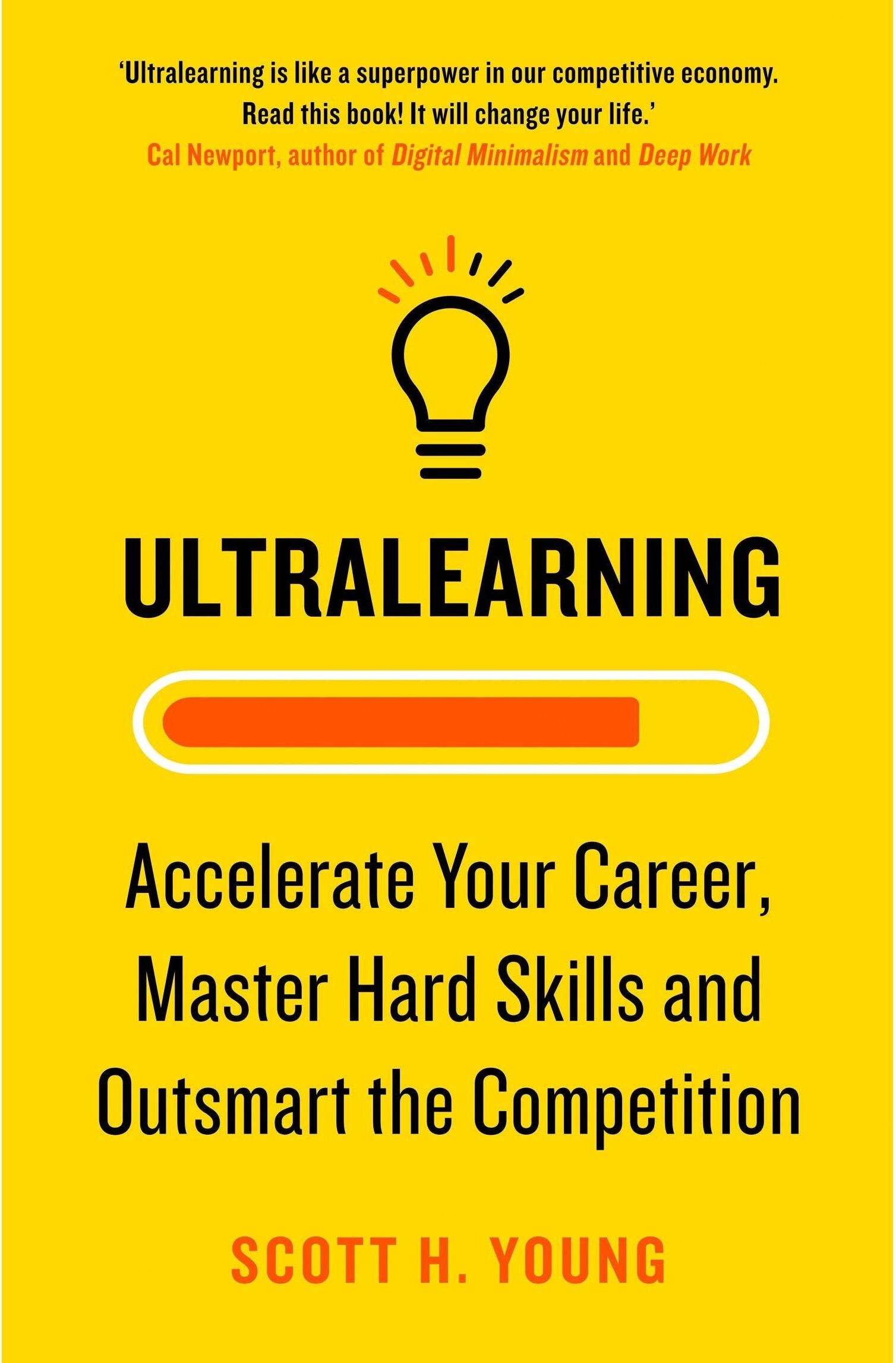
Thorsons Ultralearning: Accelerate Your Career, Master Hard Skills and Outsmart the CompetitionFuture-proof your career and maximize your competitive advantage by learning the skill necessary to stay relevant, reinvent yourself, and adapt to whatever the workplace throws your way in this essential guide. Faced with tumultuous economic times and rapid technological change, staying ahead in your career depends on continual learning―a lifelong mastery of new ideas, subjects, and skills. If you want to accomplish more and stand apart from everyone else, you need to become an ultralearner. Scott Young incorporates the latest research about the most effective learning methods and the stories of other ultralearners like himself―among them Ben Franklin, Judit Polgar, and Richard Feynman, as well as a host of others, such as little-known modern polymaths like Nigel Richards who won the World Championship of French Scrabble―without knowing French. Young documents the methods he and others have used and shows that, far from being an obscure skill limited to aggressive autodidacts, ultralearning is a powerful tool anyone can use to improve their career, studies, and life. Ultralearning explores this fascinating subculture, shares the nine principles behind every successful ultralearning project, and offers insights into how you can organize and execute a plan to learn anything deeply and quickly, without teachers or budget-busting tuition costs. Whether the goal is to be fluent in a language (or ten languages), earn the equivalent of a college degree in a fraction of the time, or master multiple skills to build a product or business from the ground up, the principles in Ultralearning will guide you to success.8,99 £*Shipping: 2,99 £Secure redirect to the provider


-
What is compulsive behavior?
Compulsive behavior refers to repetitive actions or rituals that a person feels driven to perform, often in response to an obsessive thought or to alleviate anxiety. These behaviors can interfere with daily life and may be difficult to control, despite the negative consequences they may bring. Compulsive behaviors are often associated with conditions such as obsessive-compulsive disorder (OCD) or addiction. Treatment for compulsive behavior typically involves therapy, medication, and lifestyle changes. **
-
What are compulsive impulses?
Compulsive impulses are strong, uncontrollable urges to engage in certain behaviors, often despite negative consequences. These impulses can be driven by a variety of factors, including anxiety, stress, or a desire for relief or pleasure. People with compulsive impulses may feel a sense of urgency or a lack of control over their actions, and may engage in repetitive behaviors in an attempt to alleviate their distress. Compulsive impulses can be a symptom of various mental health conditions, such as obsessive-compulsive disorder or impulse control disorders. **
-
How can the compulsive urge to laugh about the compulsive thoughts be explained?
The compulsive urge to laugh about compulsive thoughts can be explained as a coping mechanism or defense mechanism. When faced with distressing or intrusive thoughts, some individuals may feel the need to laugh as a way to release tension or to try to minimize the seriousness of the thoughts. This can also be a way to try to distance oneself from the thoughts and to avoid feeling overwhelmed by them. Additionally, laughing about the thoughts may be a way for some individuals to seek reassurance or validation from others, as they may hope that by laughing, others will also find the thoughts less serious or distressing. **
-
Is this a compulsive behavior?
Yes, the behavior described in the previous message could be considered compulsive. Compulsive behaviors are repetitive actions that a person feels driven to perform, often in response to an obsessive thought or to alleviate anxiety. In this case, the individual is engaging in a behavior (checking the door multiple times) in response to a fear (that the door is not locked), which is a common characteristic of compulsive behavior. If this behavior is interfering with the person's daily life or causing distress, it may be worth seeking help from a mental health professional. **


What are compulsive self-talks?
Compulsive self-talks are repetitive, negative thoughts or phrases that individuals constantly repeat to themselves. These thoughts are often irrational, self-critical, or destructive in nature, and can lead to feelings of anxiety, depression, or low self-esteem. Compulsive self-talks can be difficult to control and can significantly impact a person's mental well-being and overall quality of life. Therapy, mindfulness techniques, and cognitive-behavioral strategies can be helpful in managing and reducing compulsive self-talks. **
What is compulsive hand washing?
Compulsive hand washing is a behavior characterized by an overwhelming urge to repeatedly wash one's hands, often to the point of causing physical harm. This behavior is often driven by obsessive thoughts about contamination or germs, and the individual may feel intense anxiety or distress if they do not wash their hands. Compulsive hand washing is a common symptom of obsessive-compulsive disorder (OCD) and can significantly interfere with daily functioning. Treatment typically involves therapy, medication, or a combination of both to help manage the symptoms. **
Top-Angebote
Products related to Compulsive:
-
Overcoming Obsessive Compulsive Disorder (Overcoming Books): A self-help guide using cognitive behavioural techniques by David Veale;Rob WillsonDescription. Are you plagued by a recurring thought or idea that just won’t go away, feel the need to wash your hands repeatedly, to hoard things, or to repeatedly check that all appliances in the house have been turned off before you leave?These are just some of the common symptoms of obsessive compulsive disorder (or OCD), a condition that that causes distress to hundreds of thousands of people. Cognitive behavorial therapy has been clinically proven to significantly reduce these and other symptoms in the majority of cases.With this step by step approach you can learn how to break free from the destructive cycle of obsessive behavior and regain control of your life. This book: Shows you how to reduce the distress caused by disturbing thoughts, images and urges; Helps you face fears and troubling situations; Reduces and gradually helps you overcome compulsions; Offers advice on how partners, relatives and friends can help.. Title. Overcoming Obsessive Compulsive Disorder (Overcoming Books): A self-help guide using cognitive behavioural techniques by David Veale;Rob Willson. Delivery. Content. Reviews99,99 £*Shipping: 0,00 £Secure redirect to the provider
-
Martin N. Seif PhD Needing to Know for Sure: A CBT-Based Guide to Overcoming Compulsive Checking and Reassurance SeekingDescription. Condition: BRAND NEW. Format: Paperback. Do you have thoughts like these-thoughts that cause you to second-guess yourself, and lead to anxiety, stress, and worry? Do you find yourself repeatedly checking your email for no reason, asking others for their opinions about something again and again, or lying awake at night overgrazing and planning ahead in an attempt to feel less anxious? If so, you probably have a problem with compulsive reassurance seeking. The good news is that you can break free from. Title. Needing to Know for Sure: A CBT-Based Guide to Overcoming Compulsive Checking and Reassurance Seeking. Delivery. Content. Reviews99,99 £*Shipping: 0,00 £Secure redirect to the provider
-
The Readers Paradise Connect To Grow: How To Network With Confidence, Purpose And Authenticity by Shweta Chawla - Non Fiction Paperback - Career & Networking Skills GuideNetworking often feels transactional and faintly exhausting, but this practical paperback guide reframes it entirely. Shweta Chawla shows readers how to approach every professional interaction with genuine confidence, clear purpose, and real authenticity, rather than chasing quick wins at crowded events. The book offers a repeatable, human-centered framework for building lasting relationships focused on mutual value instead of collecting contacts. Whether starting a career or scaling a business, readers gain mental shifts and practical tools that make reaching out feel natural. Connect To Grow is built around a simple idea: strong professional networks are grown, not harvested. Rather than offering rigid scripts or outdated sales formulas, the book focuses on realistic, people-first connection, with an emphasis on preparation that never feels rehearsed.2,99 £*Shipping: 2,99 £Secure redirect to the provider
-
What are compulsive disorders, obsessive thoughts, and compulsive actions?
Compulsive disorders are mental health conditions characterized by the presence of obsessive thoughts and compulsive actions. Obsessive thoughts are persistent, intrusive, and unwanted thoughts that cause distress or anxiety. Compulsive actions are repetitive behaviors or rituals that a person feels driven to perform in response to their obsessive thoughts, in order to alleviate the anxiety or distress. These disorders can significantly interfere with daily functioning and can be difficult to control without professional help. **
-
What is the difference between compulsive tidying and compulsive thinking?
Compulsive tidying is a behavior characterized by an overwhelming urge to constantly clean and organize one's surroundings, often to the point of excess. On the other hand, compulsive thinking involves persistent, intrusive thoughts that are difficult to control and can lead to anxiety or distress. While compulsive tidying is focused on physical actions and organization, compulsive thinking is centered around mental processes and can be more challenging to manage. Both can be symptoms of underlying mental health conditions, such as obsessive-compulsive disorder, but they manifest in different ways. **
-
What is compulsive behavior?
Compulsive behavior refers to repetitive actions or rituals that a person feels driven to perform, often in response to an obsessive thought or to alleviate anxiety. These behaviors can interfere with daily life and may be difficult to control, despite the negative consequences they may bring. Compulsive behaviors are often associated with conditions such as obsessive-compulsive disorder (OCD) or addiction. Treatment for compulsive behavior typically involves therapy, medication, and lifestyle changes. **
-
What are compulsive impulses?
Compulsive impulses are strong, uncontrollable urges to engage in certain behaviors, often despite negative consequences. These impulses can be driven by a variety of factors, including anxiety, stress, or a desire for relief or pleasure. People with compulsive impulses may feel a sense of urgency or a lack of control over their actions, and may engage in repetitive behaviors in an attempt to alleviate their distress. Compulsive impulses can be a symptom of various mental health conditions, such as obsessive-compulsive disorder or impulse control disorders. **
Similar search terms for Compulsive
-
James Zeiger Minecraft Beginner's Guide (21st Century Skills Innovation Library: Unofficial Guides Junior) - Non Fiction - PaperbackTitle:. Minecraft Beginner's Guide Condition: BRAND NEW. Format: Paperback. ISBN: Overview:. Dive into the world of Minecraft with this kid-friendly introduction designed for young builders and curious minds. The Minecraft Beginner's Guide, part of the 21st Century Skills Innovation Library: Unofficial Guides Junior, is crafted for readers who are stepping into blocky worlds for the first time. It explains the game’s core ideas in clear, approachable language, pairing each concept with simple visuals and practical, step-by-step guidance. From gathering resources and crafting essential items to planning safe bases and exploring biomes, the book teaches critical thinking, problem-solving, and creativity in a hands-on way. The paperback format keeps reading light and portable, making it ideal for reading at home, on journeys, or in the classroom. Beyond the how-to, it encourages safe, responsible gaming and helps young players build confidence as they experiment and iterate. This is not just a manual; it’s a springboard for independent play, storytelling in a sandbox environment, and the thrill of turning ideas into buildable, shareable worlds. A thoughtful gift for budding coders and creative minds alike, it channels Minecraft’s excitement into tangible, real-world skills. What Makes This Book Stand Out:. What sets this Minecraft beginner’s guide apart is its careful balance of accessibility and depth. Written for younger readers, it uses friendly, age-appropriate language and concise explanations that demystify complex ideas without talking down to the reader. The layout emphasises clear steps, quick win moments, and visual cues that reinforce learning by doing. Readers don’t just memorize recipes; they learn problem-solving strategies, planning, and experimentation—skills that transfer beyond the game. The inclusion of safe gaming guidance aligns with parents’ and teachers’ expectations for younger players, making it a reliable tool for independent reading, guided gaming sessions, or classroom activities. This book is genuinely engaging, turning browser curiosity into confident, curious builders who can imagine, design, and execute their own Minecraft projects. Who This Book Is Perfect For:. This book is ideal for children aged roughly 8–12 who are new to Minecraft or want a clear, structured start. It also serves as a practical resource for parents seeking kid-friendly explanations, for teachers looking to integrate digital literacy into lessons, and for gift buyers searching for an engaging STEM-inspired present. Perfect for early readers who enjoy visuals, short chapters, and actionable steps, it supports growing independence and safe play habits. Whether a family reads together or a classroom uses it as a mini-curriculum, this guide makes Minecraft approachable and enjoyable from page one. Key Highlights:. Clear, beginner-friendly explanations tailored to younger readers. Step-by-step guidance paired with friendly visuals. Focus on planning,...10,82 £*Shipping: 2,99 £Secure redirect to the provider
-
Thorsons Ultralearning: Accelerate Your Career, Master Hard Skills and Outsmart the CompetitionFuture-proof your career and maximize your competitive advantage by learning the skill necessary to stay relevant, reinvent yourself, and adapt to whatever the workplace throws your way in this essential guide. Faced with tumultuous economic times and rapid technological change, staying ahead in your career depends on continual learning―a lifelong mastery of new ideas, subjects, and skills. If you want to accomplish more and stand apart from everyone else, you need to become an ultralearner. Scott Young incorporates the latest research about the most effective learning methods and the stories of other ultralearners like himself―among them Ben Franklin, Judit Polgar, and Richard Feynman, as well as a host of others, such as little-known modern polymaths like Nigel Richards who won the World Championship of French Scrabble―without knowing French. Young documents the methods he and others have used and shows that, far from being an obscure skill limited to aggressive autodidacts, ultralearning is a powerful tool anyone can use to improve their career, studies, and life. Ultralearning explores this fascinating subculture, shares the nine principles behind every successful ultralearning project, and offers insights into how you can organize and execute a plan to learn anything deeply and quickly, without teachers or budget-busting tuition costs. Whether the goal is to be fluent in a language (or ten languages), earn the equivalent of a college degree in a fraction of the time, or master multiple skills to build a product or business from the ground up, the principles in Ultralearning will guide you to success.8,99 £*Shipping: 2,99 £Secure redirect to the provider
-
Profile Books Growth Hacker Marketing: A Primer On The Future Of Business - Non Fiction - PaperbackTitle:. Growth Hacker Marketing: A Primer on the Future of Business Overview:. Growth Hacker Marketing delivers a transformative blueprint for building thriving businesses in the digital age. Rather than relying on bloated advertising budgets or legacy public relations campaigns, this essential textbook equips founders and early-stage teams with lean, data-driven methodologies designed specifically for rapid scalability. Written by industry veterans Ryan Holiday and Stephen E. Schmidt, the guide unpacks the modern discipline of growth hacking, which seamlessly merges creative storytelling, product development, and analytical rigor. You will learn how to engineer organic referral loops, optimise social sharing mechanisms, and turn existing customers into your most effective acquisition channel. Each chapter breaks down proven tactics that top-tier technology companies use to capture market share before securing external funding. The narrative avoids vague corporate jargon, instead providing a practical roadmap that prioritises testing, iteration, and measurable outcomes over guesswork. Whether you are launching your first venture or pivoting an established brand, this paperback serves as an indispensable field manual for navigating today’s fragmented media landscape. What Makes This Book Stand Out:. What separates this collection from traditional marketing textbooks is its relentless focus on economics and engineering. The pages challenge the assumption that consumer attention requires expensive broadcast campaigns, replacing that outdated mindset with clever, low-cost alternatives that actually convert. Readers gain access to meticulously documented case studies illustrating how scrappy teams leverage search engine visibility, gamification, and strategic partnerships to outmanoeuvre industry giants. The authors also emphasise product-led growth, teaching you how to design user experiences that inherently encourage viral expansion. By framing marketing as an experimental science rather than an art form, the guide empowers you to make confident decisions backed by actual performance metrics. Every principle is grounded in real-world execution, ensuring that the strategies translate directly to your operations, your spreadsheet, and your bottom line. Who This Book Is Perfect For:. This paperback is precisely tailored for startups, independent entrepreneurs, indie developers, and small business owners who simply cannot sustain traditional ad spending. Marketing managers, product designers, and growth analysts will also find immediate value in the structured frameworks for tracking acquisition costs and retention rates. Educators and university students studying contemporary commerce, digital strategy, and consumer behaviour will appreciate the contemporary approach that replaces theoretical models with actionable playbooks. It is equally suited for seasoned executives looking to modernise stagnant outreach efforts and align their teams with current...8,99 £*Shipping: 2,99 £Secure redirect to the provider
-
Learning Resources MathLink Cubes Numberblocks 21-30 Activity Set - Math Skills Development for KidsDevelop essential math skills through play with the Learning Resources MathLink Cubes Numberblocks 21-30 Activity Set. This engaging set is designed for both home and classroom environments, helping children explore numbers and basic math concepts through interactive learning. By connecting the colorful MathLink Cubes, kids can foster a hands-on approach to education and develop their problem-solving skills. With limitless combinations, they can use their imagination to create unique shapes and structures, reinforcing their understanding of number relationships. Made from high-quality materials, these cubes are durable and safe for hours of play, ensuring they last for years of learning adventures. This activity set is suitable for young learners and can be used for educational purposes or imaginative play.37,49 £*Shipping: 3,95 £Secure redirect to the provider
-
How can the compulsive urge to laugh about the compulsive thoughts be explained?
The compulsive urge to laugh about compulsive thoughts can be explained as a coping mechanism or defense mechanism. When faced with distressing or intrusive thoughts, some individuals may feel the need to laugh as a way to release tension or to try to minimize the seriousness of the thoughts. This can also be a way to try to distance oneself from the thoughts and to avoid feeling overwhelmed by them. Additionally, laughing about the thoughts may be a way for some individuals to seek reassurance or validation from others, as they may hope that by laughing, others will also find the thoughts less serious or distressing. **
-
Is this a compulsive behavior?
Yes, the behavior described in the previous message could be considered compulsive. Compulsive behaviors are repetitive actions that a person feels driven to perform, often in response to an obsessive thought or to alleviate anxiety. In this case, the individual is engaging in a behavior (checking the door multiple times) in response to a fear (that the door is not locked), which is a common characteristic of compulsive behavior. If this behavior is interfering with the person's daily life or causing distress, it may be worth seeking help from a mental health professional. **
-
What are compulsive self-talks?
Compulsive self-talks are repetitive, negative thoughts or phrases that individuals constantly repeat to themselves. These thoughts are often irrational, self-critical, or destructive in nature, and can lead to feelings of anxiety, depression, or low self-esteem. Compulsive self-talks can be difficult to control and can significantly impact a person's mental well-being and overall quality of life. Therapy, mindfulness techniques, and cognitive-behavioral strategies can be helpful in managing and reducing compulsive self-talks. **
-
What is compulsive hand washing?
Compulsive hand washing is a behavior characterized by an overwhelming urge to repeatedly wash one's hands, often to the point of causing physical harm. This behavior is often driven by obsessive thoughts about contamination or germs, and the individual may feel intense anxiety or distress if they do not wash their hands. Compulsive hand washing is a common symptom of obsessive-compulsive disorder (OCD) and can significantly interfere with daily functioning. Treatment typically involves therapy, medication, or a combination of both to help manage the symptoms. **
* All prices are inclusive of VAT and, if applicable, plus shipping costs. The offer information is based on the details provided by the respective shop and is updated through automated processes. Real-time updates do not occur, so deviations can occur in individual cases. ** Note: Parts of this content were created by AI.