Buy brainstation.eu ?
We are moving the project
brainstation.eu .
Are you interested in purchasing the domain
brainstation.eu ?
domain@kv-gmbh.de · 0541-91531010
Buy brainstation.eu ?
Was Nietzsche antisemitic?
Nietzsche's views on Judaism and Jewish people have been a topic of debate among scholars. While some argue that Nietzsche's writings contain antisemitic undertones, others believe that his criticisms were directed towards specific individuals or groups rather than the Jewish people as a whole. It is important to consider the historical context in which Nietzsche lived and wrote, as well as the complexity of his philosophical ideas, when discussing his views on this topic. **
What is Nietzsche 3?
Nietzsche 3 refers to the third phase of Friedrich Nietzsche's philosophical development, following his earlier periods of the "Apollonian" and "Dionysian" phases. In this phase, Nietzsche focused on the concept of the "will to power," which emphasizes the individual's desire for self-overcoming and self-assertion. He believed that this will to power drives human behavior and is the underlying force behind all existence. Nietzsche 3 represents a shift towards a more individualistic and existential perspective in his philosophy. **

Similar search terms for Nietzsche
Top-Angebote
Products related to Nietzsche:
-
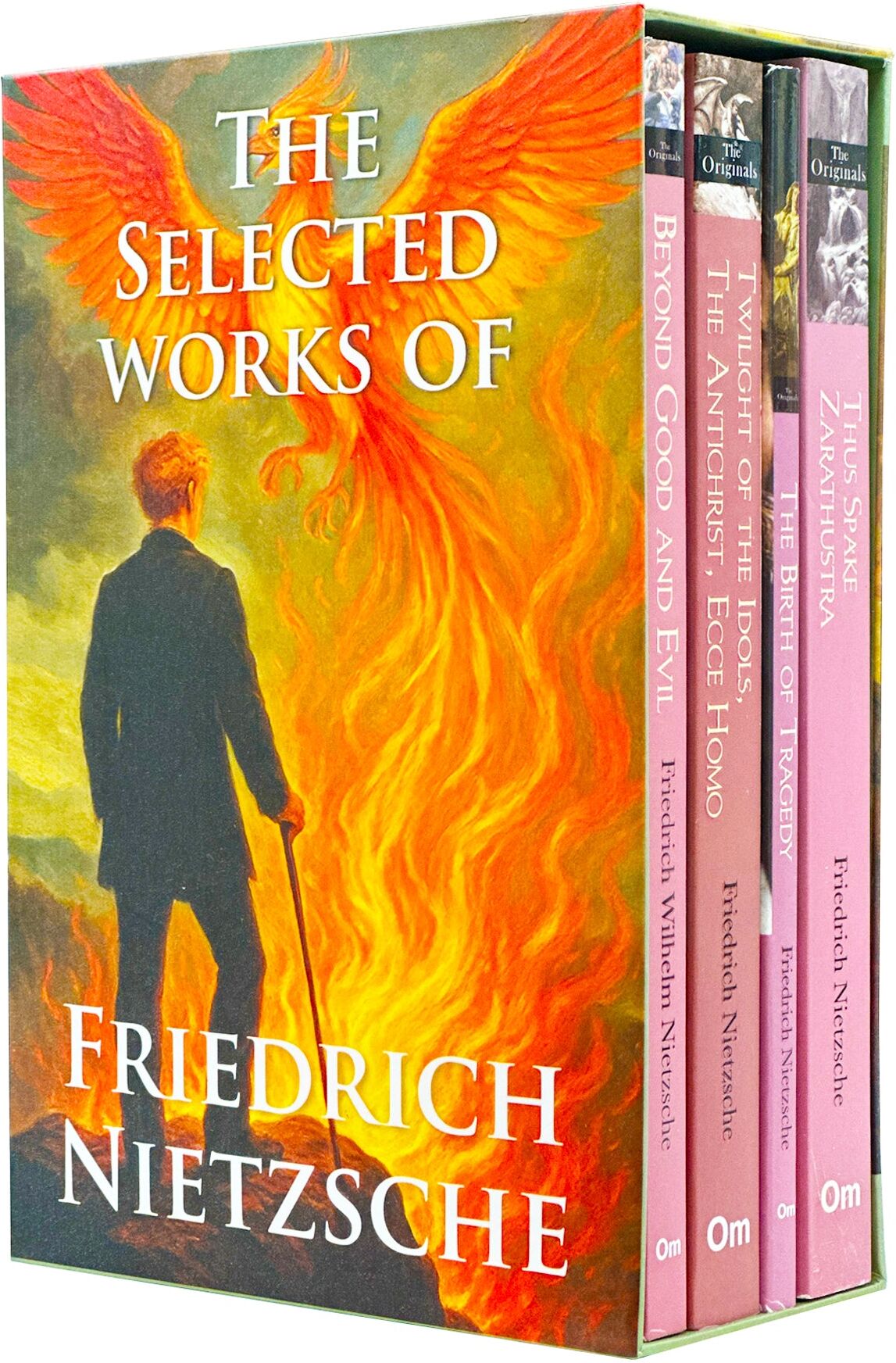
OM Books The Selected Works of Friedrich Nietzsche 4 Books Collection SetThe works of Friedrich Nietzsche, German philosopher and cultural critic, influenced Western philosophy and intellectual history. This box set brings together his most influential works that include his radical critique of truth in favour of perspectivisim; a genealogical critique of religion and Christian morality; the aesthetic affirmation of life and the profound crisis of nihilism; and a charaterisation of the human subject as the expression of competing wills.12,95 £*Shipping: 2,99 £Secure redirect to the provider
-
Beyond Good And Evil: Wilco Classics Sprayed Edge Premium by Friedrich NietzscheDescription. Title :. Beyond Good And Evil: Wilco Classics Sprayed Edge Premium by Friedrich Nietzsche. Condition: BRAND NEW. Format: Hardcover. ISBN: 9789363126404. In Beyond Good and Evil, Friedrich Nietzsche questions the foundations of morality, religion, and philosophical certainty. With a sharp, often confrontational voice, he urges readers to look past surface ideals and consider what truly drives human thought and behaviour.. This work calls for clear-eyed thinking, challenging comfortable beliefs and exposing the forces behind what society calls good or evil.. About the Author:. Friedrich Wilhelm Nietzsche (15 October 1844 – 25 August 1900) was a German philosopher. He began his career as a classical philologist, turning to philosophy early in his academic career. In 1869, aged 24, Nietzsche became the youngest professor to hold the Chair of Classical Philology at the University of Basel. Plagued by health problems for most of his life, he resigned from the university in 1879, and in the following decade he completed much of his core writing. In 1889, aged 44, he suffered a collapse and thereafter a complete loss of his mental faculties, with paralysis and vascular dementia, living his remaining 11 years under the care of his family until his death. His works and his philosophy have fostered not only extensive scholarship but also much popular interest.. Title. Beyond Good And Evil: Wilco Classics Sprayed Edge Premium by Friedrich Nietzsche. Delivery. Content. Reviews3,99 £*Shipping: 2,99 £Secure redirect to the provider
-
Icon Books Introducing Nietzsche: A Graphic Guide - Non Fiction Collection Set - PaperbackTitle:. Introducing Nietzsche: A Graphic Guide Format: Paperback. Series: Graphic Guide (Icon Books) Overview:. Exploring the life and ideas of Friedrich Nietzsche requires a guide that balances depth with clarity, which is exactly what *Introducing Nietzsche: A Graphic Guide* delivers. Written by distinguished philosopher John Marenbon and illustrated by Peter Hodgkinson, this title combines compelling narrative prose with striking visual art to make one of philosophy's most provocative figures accessible to a wide audience. Unlike dense academic tomes that can alienate newcomers, this approach uses dialogue, historical context, and vivid imagery to illuminate Nietzsche's core arguments, including the death of God, the will to power, eternal recurrence, and the concept of theÜbermensch. The guide takes readers on a journey through Nietzsche's turbulent career, from his formative years to the creation of masterworks like *Thus Spoke Zarathustra* and *Beyond Good and Evil*. It illuminates his influence on modern culture while addressing frequent misconceptions about his legacy. Designed as a trusted resource within the renowned Graphic Guide series, this paperback edition offers a dynamic entry point for students tackling continental philosophy, curious beginners, and readers seeking a structured yet engaging introduction to a thinker who fundamentally reshaped Western thought.. The unique format transforms abstract metaphysical questions into relatable scenarios, allowing the complexities of Nietzschean philosophy to emerge naturally through storytelling. This ensures that readersgain not just factual knowledge, but a genuine understanding of why Nietzsche remains an indispensable voice in discussions about morality, meaning, and human potential. What Makes This Book Stand Out:. The standout feature of this book is its ability to translate Nietzsche's notoriously difficult terminology into clear, memorable explanations without oversimplifying the substance. The graphic panel style provides cognitive benefits that aid retention; visual cues reinforce textual concepts, helping readers distinguish between Nietzsche's own views and the interpretations offered by critics. Marenbon brings the authority of academic expertise to ensure every claim is accurate, yet he avoids dry exposition, favouring a conversational tone that invites active thinking. Hodgkinson's artwork adds a layer of interpretation that complements the text, using expressive character designs and symbolic landscapes to evoke the dramatic tension of Nietzsche's writings.. This collaboration results in a reading experience that feels fresh and contemporary. Furthermore, the compact size makes it portable and approachable, serving as a perfect study aid for exam preparation or a relaxed coffee-table read for philosophical enthusiasts. It excels at demystifying the Übermensch and overcoming nihilism, topics often shrouded in misrepresentation, providing balanced analysis that respects the...8,99 £*Shipping: 2,99 £Secure redirect to the provider
-
Plato & Frederich Nietzsche Great Philosophers Masterworks Classics 7 Books Collection Set - Non Fiction - HardbackTitles in This Set:. The Dialogues of Socrates by Plato. On Happiness by Epicurus. Meditations by Marcus Aurelius. Meditations on First Philosophy and Other Metaphysical Writings by René Descartes. The Social Contract by Jean-Jaques Rousseau. On Liberty by John Stuart Mill. Beyond Good and Evil by Friendrich Nietzsche Condition: BRAND NEW. Format: Hardcover. ISBN: 9781398839236 Overview:. The Great Philosophers Collection: Deluxe 7-Book Hardback Boxed Set (Arcturus Collector's Classics) brings seven cornerstone works into one elegant boxed edition. Journey from ancient dialogue to modern critique with Plato, Epicurus, Marcus Aurelius, René Descartes, Jean-Jaques Rousseau, John Stuart Mill, and Friendrich Nietzsche. This deluxe hardcover box set is crafted for serious readers who crave a coherent, immersive reading experience across centuries of thinking about virtue, happiness, freedom, knowledge, and the social order. Each title offers direct access to foundational ideas that continue to shape ethics, politics, epistemology, and personal conduct. Whether studying for coursework, building a personal philosophy shelf, or gifting a thoughtful, enduring collection, this set provides a cohesive, high-quality entry into the great conversations that have defined Western thought. What Makes This Collection Special:. What makes this collection truly stand apart is the curated trajectory through the core questions that have guided human inquiry for millennia. Read Plato’s early explorations of virtue and justice, then follow Epicurus’s tranquil path to happiness, and progress to Marcus Aurelius’s disciplined self-governance. Descartes introduces a method of doubt that underpins modern science, Rousseau critiques the rights and responsibilities of the citizen, Mill defends individual liberty and the limits of authority, and Nietzsche unsettles inherited morality to provoke fresh perspective. The sequence offers not only intellectual breadth but practical resonance—ways to approach life, society, and authority with clarity and courage. The Arcturus Collector’s Classics binding emphasizes durability and a timeless aesthetic, making this set a treasured addition to any serious library or study space. Books Included in This Collection:. The Dialogues of Socrates by Plato. Plato’s dialogues invite readers into intimate conversations about justice, virtue, and the good life. This volume distills the Socratic method—questioning assumptions, exposing contradictions, and guiding readers toward clearer thinking. Accessible yet profound, the dialogues encourage active engagement, turning reading into dialogue itself. Ideal for students and curious readers alike, it offers a lucid entry into classical philosophy that remains relevant to modern ethical and political questions. On Happiness by Epicurus. Epicurus guides readers toward a tranquil life grounded in simple pleasures, meaningful friendship, and freedom from fear. This volume translates ancient ideals into...23,99 £*Shipping: 2,99 £Secure redirect to the provider


-
Did Nietzsche have depression?
There is no definitive answer to whether Nietzsche had depression as he was never formally diagnosed during his lifetime. However, many scholars and psychologists have analyzed his writings and personal correspondence and have suggested that he may have experienced symptoms of depression, such as feelings of despair, isolation, and nihilism. Nietzsche's own writings also reflect a deep sense of existential crisis and inner turmoil, which could be interpreted as indicative of depression. **
-
How sick was Nietzsche?
Nietzsche suffered from various health issues throughout his life, including severe migraines, vision problems, and digestive problems. In 1889, he experienced a mental breakdown and was diagnosed with syphilis, which eventually led to his deteriorating mental and physical health. He spent the last 11 years of his life in a state of mental and physical decline, eventually becoming completely incapacitated. His illness and decline greatly impacted his ability to continue his philosophical work and led to his eventual death in 1900. **
-
Are Friedrich Nietzsche demigods?
No, Friedrich Nietzsche was not a demigod. He was a philosopher and cultural critic known for his ideas on existentialism, morality, and the concept of the "Übermensch" or "overman." While his ideas have had a significant impact on philosophy and intellectual thought, he was a human being and not a supernatural or divine figure. It is important to approach his work critically and engage with his ideas in a thoughtful and analytical manner. **
-
How can one understand Nietzsche?
To understand Nietzsche, one must delve into his philosophical works and writings to grasp his ideas and concepts. It is important to study his key themes such as the will to power, the eternal recurrence, and the concept of the Ubermensch. Additionally, one should consider the historical context in which Nietzsche was writing, as well as his personal background and influences. Engaging with secondary sources and interpretations can also provide valuable insights into Nietzsche's complex and often controversial philosophy. **


Was Nietzsche friendly towards war?
Nietzsche had a complex and often contradictory relationship with war. On one hand, he was critical of the destructive and senseless nature of war, and he believed that it could lead to the decline of civilization. However, he also saw war as a potential catalyst for the emergence of a new, stronger society, and he believed that it could serve as a means of overcoming decadence and promoting the development of a higher human type. Overall, Nietzsche's views on war were nuanced and evolved over time, reflecting his broader philosophical concerns about power, struggle, and the potential for human advancement. **
Is God or Nietzsche dead?
Nietzsche famously declared that "God is dead" to signify the decline of traditional religious beliefs and the rise of secularism and individualism. However, this statement is often misunderstood as a literal claim about the existence of God. In contrast, Nietzsche's proclamation was more about the cultural and philosophical shifts away from traditional religious authority. As for Nietzsche himself, he passed away in 1900, so he is indeed dead. However, the question of the existence of God is a matter of personal belief and interpretation, and opinions on this topic vary widely. **
Top-Angebote
Products related to Nietzsche:
-
Frederich Nietzsche The Classic Nietzsche Collection by Friedrich Nietzsche 5 Books Collection Set - Non Fiction - PaperbackTitles in This Set:. Human, All Too Human. Thus Spake Zarathustra. Beyond Good and Evil. On the Genealogy of Morals. Ecce Homo Condition: BRAND NEW. Format: Paperback Overview:. The Classic Friedrich Nietzsche Collection is a handsome five-volume box set that brings together Nietzsche’s most influential works in a single, accessible package. This edition features striking contemporary cover designs crafted to engage today’s readers while inviting serious study of one of Western philosophy’s most provocative voices. Inside, you’ll find five cornerstone texts that have shaped debates about truth, morality, culture, and the meaning of existence: Human, All Too Human; Thus Spake Zarathustra; Beyond Good and Evil; On the Genealogy of Morals; Ecce Homo. Each paperback edition makes these dense, sometimes challenging ideas approachable for modern readers—whether you’re a student building a philosophy library, a curious reader exploring new ways of thinking, or searching for a thoughtful gift for a thinker in your life. This box set offers a compact, durable, and visually engaging way to own Nietzsche’s core works in one place. What Makes This Collection Special:. This box set captures Nietzsche’s intellectual arc in a cohesive, accessible format. It begins with Human, All Too Human, a sharp turn toward psychological and cultural critique, then moves into Zarathustra’s prophetic meditations, followed by the rigorous moral testing of Beyond Good and Evil and the genealogical probing of morality in On the Genealogy of Morals. Ecce Homo closes the circle with a bold, introspective self-portrait. The five-volume box not only provides a complete reading path, it creates a striking, shelf-worthy display that signals serious thought to guests and invites ongoing discussion in study groups or evening reading circles. It’s a thoughtful gift for graduates, students, or any reader drawn to philosophy, ethics, and existential inquiry. Books Included in This Collection:. Human, All Too Human. A landmark collection of aphorisms and brief essays that surveys psychology, culture, religion, and morality with a clear-eyed, sometimes iconoclastic tone. The book reads as a bridge between Nietzsche’s early Romantic impulses and his later, more rigorous critiques, offering concise observations that invite reflection and discussion. Readers will encounter sharp social commentary, practical insights into human behavior, and a path toward understanding Nietzsche’s evolving view of truth and value—perfect for bitesized study sessions or paired reading with Zarathustra. ~60–100 words. Thus Spake Zarathustra. Nietzsche’s most famous work, written as a philosophical novel in lyrical, prophetic prose. Zarathustra journeys through a world of mountains and markets, delivering parables on the Übermensch, the will to power, and the rejection of herd morality. The book’s poetic chapters reward rereading and invite readers to wrestle with big questions about meaning, freedom, and human...16,99 £*Shipping: 2,99 £Secure redirect to the provider
-
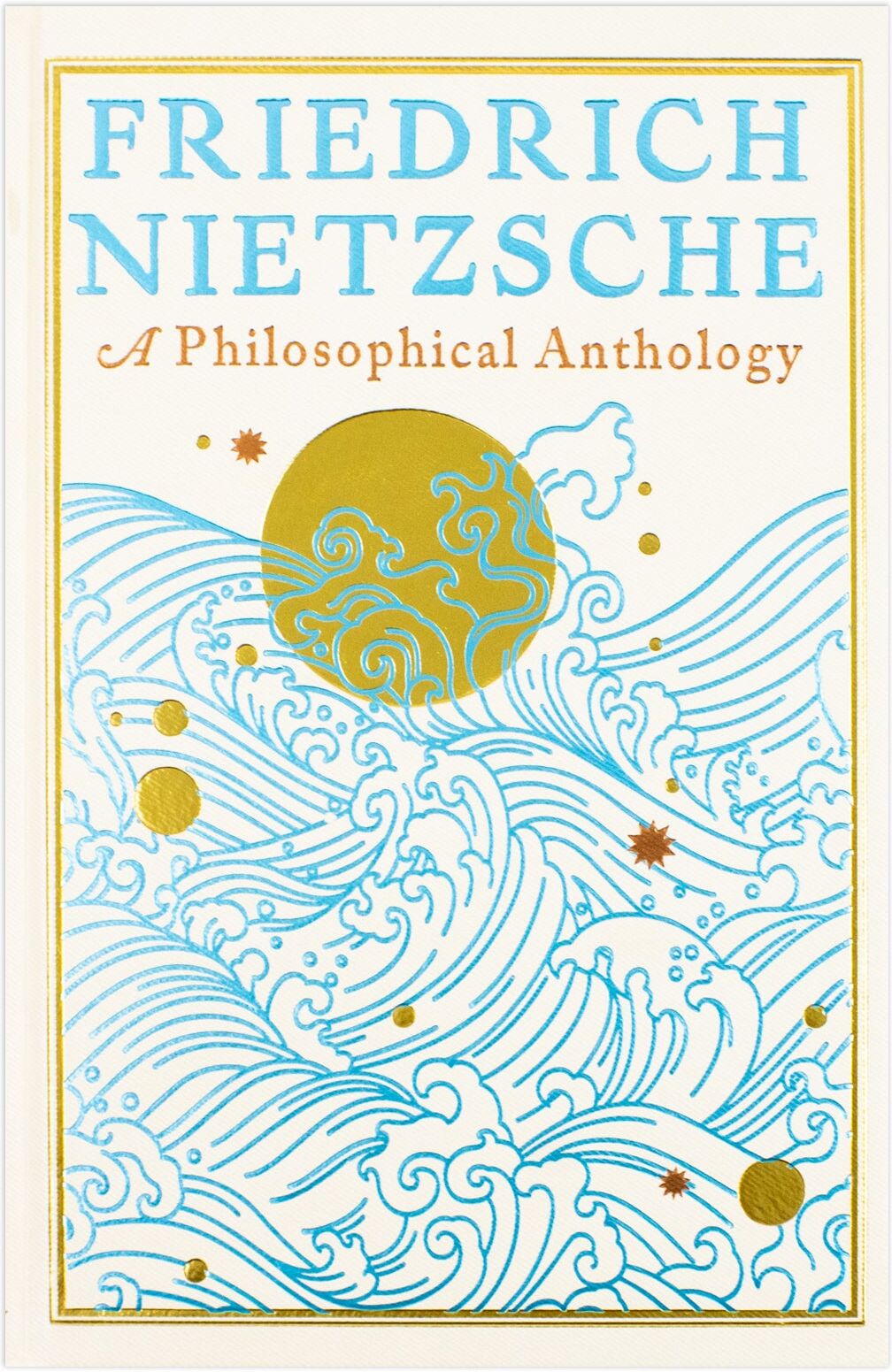
Wilco Books A Philosophical Anthology by Friedrich Nietzsche (Deluxe Leather Bound Edition)Dive into the mind of Friedrich Nietzsche with this comprehensive collection. Bringing together his most impactful works like Thus Spake Zarathustra, Beyond Good and Evil, On the Genealogy of Morals, etc, this volume confronts hard questions about power and morality. Nietzsche challenges conventional truth, dismantles traditional values, and demands that readers forge their own path. An unfiltered look into a philosophy that completely reshaped modern thinking for readers ready to question everything.10,99 £*Shipping: 2,99 £Secure redirect to the provider
-
OM Books The Selected Works of Friedrich Nietzsche 4 Books Collection SetThe works of Friedrich Nietzsche, German philosopher and cultural critic, influenced Western philosophy and intellectual history. This box set brings together his most influential works that include his radical critique of truth in favour of perspectivisim; a genealogical critique of religion and Christian morality; the aesthetic affirmation of life and the profound crisis of nihilism; and a charaterisation of the human subject as the expression of competing wills.12,95 £*Shipping: 2,99 £Secure redirect to the provider
-
Beyond Good And Evil: Wilco Classics Sprayed Edge Premium by Friedrich NietzscheDescription. Title :. Beyond Good And Evil: Wilco Classics Sprayed Edge Premium by Friedrich Nietzsche. Condition: BRAND NEW. Format: Hardcover. ISBN: 9789363126404. In Beyond Good and Evil, Friedrich Nietzsche questions the foundations of morality, religion, and philosophical certainty. With a sharp, often confrontational voice, he urges readers to look past surface ideals and consider what truly drives human thought and behaviour.. This work calls for clear-eyed thinking, challenging comfortable beliefs and exposing the forces behind what society calls good or evil.. About the Author:. Friedrich Wilhelm Nietzsche (15 October 1844 – 25 August 1900) was a German philosopher. He began his career as a classical philologist, turning to philosophy early in his academic career. In 1869, aged 24, Nietzsche became the youngest professor to hold the Chair of Classical Philology at the University of Basel. Plagued by health problems for most of his life, he resigned from the university in 1879, and in the following decade he completed much of his core writing. In 1889, aged 44, he suffered a collapse and thereafter a complete loss of his mental faculties, with paralysis and vascular dementia, living his remaining 11 years under the care of his family until his death. His works and his philosophy have fostered not only extensive scholarship but also much popular interest.. Title. Beyond Good And Evil: Wilco Classics Sprayed Edge Premium by Friedrich Nietzsche. Delivery. Content. Reviews3,99 £*Shipping: 2,99 £Secure redirect to the provider
-
Was Nietzsche antisemitic?
Nietzsche's views on Judaism and Jewish people have been a topic of debate among scholars. While some argue that Nietzsche's writings contain antisemitic undertones, others believe that his criticisms were directed towards specific individuals or groups rather than the Jewish people as a whole. It is important to consider the historical context in which Nietzsche lived and wrote, as well as the complexity of his philosophical ideas, when discussing his views on this topic. **
-
What is Nietzsche 3?
Nietzsche 3 refers to the third phase of Friedrich Nietzsche's philosophical development, following his earlier periods of the "Apollonian" and "Dionysian" phases. In this phase, Nietzsche focused on the concept of the "will to power," which emphasizes the individual's desire for self-overcoming and self-assertion. He believed that this will to power drives human behavior and is the underlying force behind all existence. Nietzsche 3 represents a shift towards a more individualistic and existential perspective in his philosophy. **
-
Did Nietzsche have depression?
There is no definitive answer to whether Nietzsche had depression as he was never formally diagnosed during his lifetime. However, many scholars and psychologists have analyzed his writings and personal correspondence and have suggested that he may have experienced symptoms of depression, such as feelings of despair, isolation, and nihilism. Nietzsche's own writings also reflect a deep sense of existential crisis and inner turmoil, which could be interpreted as indicative of depression. **
-
How sick was Nietzsche?
Nietzsche suffered from various health issues throughout his life, including severe migraines, vision problems, and digestive problems. In 1889, he experienced a mental breakdown and was diagnosed with syphilis, which eventually led to his deteriorating mental and physical health. He spent the last 11 years of his life in a state of mental and physical decline, eventually becoming completely incapacitated. His illness and decline greatly impacted his ability to continue his philosophical work and led to his eventual death in 1900. **
Similar search terms for Nietzsche
-
Icon Books Introducing Nietzsche: A Graphic Guide - Non Fiction Collection Set - PaperbackTitle:. Introducing Nietzsche: A Graphic Guide Format: Paperback. Series: Graphic Guide (Icon Books) Overview:. Exploring the life and ideas of Friedrich Nietzsche requires a guide that balances depth with clarity, which is exactly what *Introducing Nietzsche: A Graphic Guide* delivers. Written by distinguished philosopher John Marenbon and illustrated by Peter Hodgkinson, this title combines compelling narrative prose with striking visual art to make one of philosophy's most provocative figures accessible to a wide audience. Unlike dense academic tomes that can alienate newcomers, this approach uses dialogue, historical context, and vivid imagery to illuminate Nietzsche's core arguments, including the death of God, the will to power, eternal recurrence, and the concept of theÜbermensch. The guide takes readers on a journey through Nietzsche's turbulent career, from his formative years to the creation of masterworks like *Thus Spoke Zarathustra* and *Beyond Good and Evil*. It illuminates his influence on modern culture while addressing frequent misconceptions about his legacy. Designed as a trusted resource within the renowned Graphic Guide series, this paperback edition offers a dynamic entry point for students tackling continental philosophy, curious beginners, and readers seeking a structured yet engaging introduction to a thinker who fundamentally reshaped Western thought.. The unique format transforms abstract metaphysical questions into relatable scenarios, allowing the complexities of Nietzschean philosophy to emerge naturally through storytelling. This ensures that readersgain not just factual knowledge, but a genuine understanding of why Nietzsche remains an indispensable voice in discussions about morality, meaning, and human potential. What Makes This Book Stand Out:. The standout feature of this book is its ability to translate Nietzsche's notoriously difficult terminology into clear, memorable explanations without oversimplifying the substance. The graphic panel style provides cognitive benefits that aid retention; visual cues reinforce textual concepts, helping readers distinguish between Nietzsche's own views and the interpretations offered by critics. Marenbon brings the authority of academic expertise to ensure every claim is accurate, yet he avoids dry exposition, favouring a conversational tone that invites active thinking. Hodgkinson's artwork adds a layer of interpretation that complements the text, using expressive character designs and symbolic landscapes to evoke the dramatic tension of Nietzsche's writings.. This collaboration results in a reading experience that feels fresh and contemporary. Furthermore, the compact size makes it portable and approachable, serving as a perfect study aid for exam preparation or a relaxed coffee-table read for philosophical enthusiasts. It excels at demystifying the Übermensch and overcoming nihilism, topics often shrouded in misrepresentation, providing balanced analysis that respects the...8,99 £*Shipping: 2,99 £Secure redirect to the provider
-
Plato & Frederich Nietzsche Great Philosophers Masterworks Classics 7 Books Collection Set - Non Fiction - HardbackTitles in This Set:. The Dialogues of Socrates by Plato. On Happiness by Epicurus. Meditations by Marcus Aurelius. Meditations on First Philosophy and Other Metaphysical Writings by René Descartes. The Social Contract by Jean-Jaques Rousseau. On Liberty by John Stuart Mill. Beyond Good and Evil by Friendrich Nietzsche Condition: BRAND NEW. Format: Hardcover. ISBN: 9781398839236 Overview:. The Great Philosophers Collection: Deluxe 7-Book Hardback Boxed Set (Arcturus Collector's Classics) brings seven cornerstone works into one elegant boxed edition. Journey from ancient dialogue to modern critique with Plato, Epicurus, Marcus Aurelius, René Descartes, Jean-Jaques Rousseau, John Stuart Mill, and Friendrich Nietzsche. This deluxe hardcover box set is crafted for serious readers who crave a coherent, immersive reading experience across centuries of thinking about virtue, happiness, freedom, knowledge, and the social order. Each title offers direct access to foundational ideas that continue to shape ethics, politics, epistemology, and personal conduct. Whether studying for coursework, building a personal philosophy shelf, or gifting a thoughtful, enduring collection, this set provides a cohesive, high-quality entry into the great conversations that have defined Western thought. What Makes This Collection Special:. What makes this collection truly stand apart is the curated trajectory through the core questions that have guided human inquiry for millennia. Read Plato’s early explorations of virtue and justice, then follow Epicurus’s tranquil path to happiness, and progress to Marcus Aurelius’s disciplined self-governance. Descartes introduces a method of doubt that underpins modern science, Rousseau critiques the rights and responsibilities of the citizen, Mill defends individual liberty and the limits of authority, and Nietzsche unsettles inherited morality to provoke fresh perspective. The sequence offers not only intellectual breadth but practical resonance—ways to approach life, society, and authority with clarity and courage. The Arcturus Collector’s Classics binding emphasizes durability and a timeless aesthetic, making this set a treasured addition to any serious library or study space. Books Included in This Collection:. The Dialogues of Socrates by Plato. Plato’s dialogues invite readers into intimate conversations about justice, virtue, and the good life. This volume distills the Socratic method—questioning assumptions, exposing contradictions, and guiding readers toward clearer thinking. Accessible yet profound, the dialogues encourage active engagement, turning reading into dialogue itself. Ideal for students and curious readers alike, it offers a lucid entry into classical philosophy that remains relevant to modern ethical and political questions. On Happiness by Epicurus. Epicurus guides readers toward a tranquil life grounded in simple pleasures, meaningful friendship, and freedom from fear. This volume translates ancient ideals into...23,99 £*Shipping: 2,99 £Secure redirect to the provider
-
Collected Works of Friedrich Nietzsche 6 Books Collection Box Set - Non Fiction - Hardback Wilco BooksTitles in this set: 1. The Twilight Of The Idols 2. Beyond Good And Evil 3. Human, All Too Human 4. Ecce Homo 5. Thus Spake Zarathustra 6. On The Genealogy of Morals Titles in this Set: The Twilight Of The Idols The Twilight of the Idols by Friedrich Nietzsche is an examination and destruction of the antiquated ideals and values of the time. In this work, the author is on a warpath against reason. The attacks on contemporary philosophers are frequently hostile, and the suggested opinions, often devastating However, it shows a deep understanding of morality and man's mean-spiritedness, while keeping alive an underlying feeling of optimism and affirmation. Beyond Good And Evil Beyond Good and Evil is Friedrich Nietzsche's seminal work that delves further into the concept previously discussed in Thus Spoke Zarathustra. First published in 1886, this book tackles the debate between an individual's feeling to stand out among others and our desire to serve others. This book explores a wide gamut of themes what is considered evil today was perhaps believed to be good before, an analysis of Christian morality, deep insights into human psychology, the concept of nationalism. This masterpiece of aphorisms continues to inspire thinkers even now. Human, All Too Human A series of maxims on everything from passion, science, vanity, women, and youth, to art, arrogance, and boredom, Human, All Too Human was referred to by Nietzsche himself as "the monument of a crisis" because it was produced during a period of profound change in his life. With his new "positivism" and scepticism, Nietzsche challenged his earlier metaphysical and psychological presumptions. Here, almost all of the issues from his later work are presented in highly witty language with a distinctive perceptiveness and honesty, not to mention mistrust and cynicism. It is still one of the foundational books for comprehending Nietzsche's philosophy. Ecce Homo Ecce Homo: How One Becomes What One Is was written in German by philosopher Friedrich Nietzsche in 1888. It was not published until 1908. Nietzsche traces his life and offers his own interpretation of his development as a philosopher He emphatically points out how unique his ideas are. He shows himself as separate from the masses who give in to self-indulgent feelings of pity. He announces boldly about how he does not feel remorse. He fully submits himself to his fatalistic beliefs and accepts life as it comes. The book contains several chapters with ironic self-laudatory titles, such as "Why I Am So Wise", "Why 1 Am So Clever", and " Why 1 Am a Destiny". Half-mocking and half-earnest, Ecce Homo is the definitive expression of Nietzsche's core beliefs. Thus Spake Zarathustra Friedrich Nietzsche's Thus Spake Zarathustra, published in four volumes between 1883 and 1885, is a work of philosophical fiction which seeks to address the problem of existence in a world where "God is dead". The author's search for meaning culminates in Zarathustra, the...19,99 £*Shipping: 2,99 £Secure redirect to the provider
-
The Complete Works of Friedrich Nietzsche 6 Books Box Collection Set - Non Fiction - Paperback Classic EditionsTitles in this set: 1. The Twilight Of The Idols 2. Beyond Good And Evil 3. Human, All Too Human 4. Ecce Homo 5. Thus Spake Zarathustra 6. On The Genealogy Of Morals Titles in this Set: The Twilight Of The Idols The Twilight of the Idols by Friedrich Nietzsche is an examination and destruction of the antiquated ideals and values of the time. In this work, the author is on a warpath against reason. The attacks on contemporary philosophers are frequently hostile, and the suggested opinions, often devastating However, it shows a deep understanding of morality and man's mean-spiritedness, while keeping alive an underlying feeling of optimism and affirmation. Beyond Good And Evil Beyond Good and Evil is Friedrich Nietzsche's seminal work that delves further into the concept previously discussed in Thus Spoke Zarathustra. First published in 1886, this book tackles the debate between an individual's feeling to stand out among others and our desire to serve others. This book explores a wide gamut of themes what is considered evil today was perhaps believed to be good before, an analysis of Christian morality, deep insights into human psychology, the concept of nationalism. This masterpiece of aphorisms continues to inspire thinkers even now. Human, All Too Human A series of maxims on everything from passion, science, vanity, women, and youth, to art, arrogance, and boredom, Human, All Too Human was referred to by Nietzsche himself as "the monument of a crisis" because it was produced during a period of profound change in his life. With his new "positivism" and scepticism, Nietzsche challenged his earlier metaphysical and psychological presumptions. Here, almost all of the issues from his later work are presented in highly witty language with a distinctive perceptiveness and honesty, not to mention mistrust and cynicism. It is still one of the foundational books for comprehending Nietzsche's philosophy. Ecce Homo Ecce Homo: How One Becomes What One Is was written in German by philosopher Friedrich Nietzsche in 1888. It was not published until 1908. Nietzsche traces his life and offers his own interpretation of his development as a philosopher He emphatically points out how unique his ideas are. He shows himself as separate from the masses who give in to self-indulgent feelings of pity. He announces boldly about how he does not feel remorse. He fully submits himself to his fatalistic beliefs and accepts life as it comes. The book contains several chapters with ironic self-laudatory titles, such as "Why I Am So Wise", "Why 1 Am So Clever", and " Why 1 Am a Destiny". Half-mocking and half-earnest, Ecce Homo is the definitive expression of Nietzsche's core beliefs. Thus Spake Zarathustra Friedrich Nietzsche's Thus Spake Zarathustra, published in four volumes between 1883 and 1885, is a work of philosophical fiction which seeks to address the problem of existence in a world where "God is dead". The author's search for meaning culminates in Zarathustra, the...12,89 £*Shipping: 2,99 £Secure redirect to the provider
-
Are Friedrich Nietzsche demigods?
No, Friedrich Nietzsche was not a demigod. He was a philosopher and cultural critic known for his ideas on existentialism, morality, and the concept of the "Übermensch" or "overman." While his ideas have had a significant impact on philosophy and intellectual thought, he was a human being and not a supernatural or divine figure. It is important to approach his work critically and engage with his ideas in a thoughtful and analytical manner. **
-
How can one understand Nietzsche?
To understand Nietzsche, one must delve into his philosophical works and writings to grasp his ideas and concepts. It is important to study his key themes such as the will to power, the eternal recurrence, and the concept of the Ubermensch. Additionally, one should consider the historical context in which Nietzsche was writing, as well as his personal background and influences. Engaging with secondary sources and interpretations can also provide valuable insights into Nietzsche's complex and often controversial philosophy. **
-
Was Nietzsche friendly towards war?
Nietzsche had a complex and often contradictory relationship with war. On one hand, he was critical of the destructive and senseless nature of war, and he believed that it could lead to the decline of civilization. However, he also saw war as a potential catalyst for the emergence of a new, stronger society, and he believed that it could serve as a means of overcoming decadence and promoting the development of a higher human type. Overall, Nietzsche's views on war were nuanced and evolved over time, reflecting his broader philosophical concerns about power, struggle, and the potential for human advancement. **
-
Is God or Nietzsche dead?
Nietzsche famously declared that "God is dead" to signify the decline of traditional religious beliefs and the rise of secularism and individualism. However, this statement is often misunderstood as a literal claim about the existence of God. In contrast, Nietzsche's proclamation was more about the cultural and philosophical shifts away from traditional religious authority. As for Nietzsche himself, he passed away in 1900, so he is indeed dead. However, the question of the existence of God is a matter of personal belief and interpretation, and opinions on this topic vary widely. **
* All prices are inclusive of VAT and, if applicable, plus shipping costs. The offer information is based on the details provided by the respective shop and is updated through automated processes. Real-time updates do not occur, so deviations can occur in individual cases. ** Note: Parts of this content were created by AI.