Buy brainstation.eu ?
We are moving the project
brainstation.eu .
Are you interested in purchasing the domain
brainstation.eu ?
domain@kv-gmbh.de · 0541-91531010
Buy brainstation.eu ?
Can shapes converge?
Yes, shapes can converge. Convergence refers to the coming together or meeting at a point. In geometry, shapes can converge when their sides or lines intersect at a common point. For example, the sides of a triangle converge at its vertices, and the sides of a square converge at its corners. In art and design, shapes can also be arranged in a way that creates a sense of convergence, leading the viewer's eye to a focal point. **
What are stage shapes?
Stage shapes refer to the different configurations or layouts that a stage can take on for a performance. These shapes can include proscenium, thrust, arena, and black box stages, each with its own unique characteristics and advantages. The choice of stage shape can impact the audience experience, sightlines, acoustics, and overall atmosphere of a performance. Different types of performances may benefit from different stage shapes depending on the desired interaction between performers and audience. **


Similar search terms for Shapes
Top-Angebote
Products related to Shapes:
-
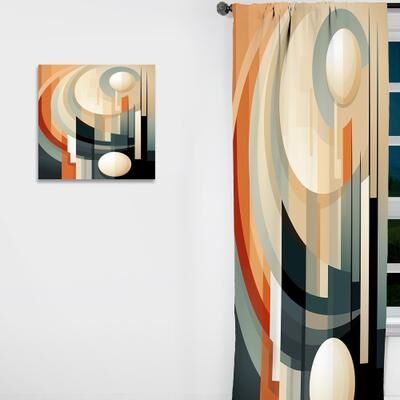
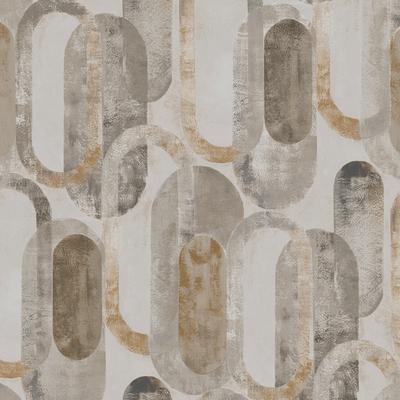
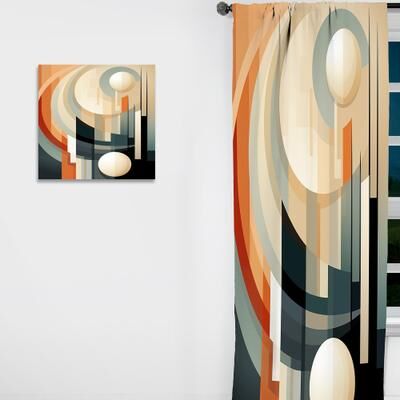
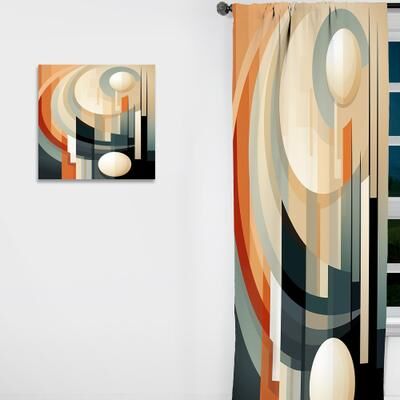
DESIGN ART "Designart ""Vanilla Vectors Abstract Shapes I"" Abstract Shapes Curtain - Blackout Abstract Curtain - 1 Panel""Bring a breath of fresh air to your windows and spruce up any space in your home with this ""Vanilla Vectors Abstract Shapes I"" Abstract Shapes 1 panel curtain. This beautiful Modern & Contemporary curtain is handmade on demand just for you."72,92 $*Shipping: 0,00 $Secure redirect to the provider
-
DESIGN ART "Designart ""Vanilla Vectors Abstract Shapes I"" Abstract Shapes Curtain - Blackout Abstract Curtain - 1 Panel""Bring a breath of fresh air to your windows and spruce up any space in your home with this ""Vanilla Vectors Abstract Shapes I"" Abstract Shapes 1 panel curtain. This beautiful Modern & Contemporary curtain is handmade on demand just for you."85,86 $*Shipping: 0,00 $Secure redirect to the provider

-
What are mouth shapes?
Mouth shapes refer to the different positions and movements of the lips, tongue, and jaw when producing speech sounds. These shapes are essential in forming the sounds of language and can vary depending on the specific sound being produced. By understanding and practicing different mouth shapes, individuals can improve their pronunciation and clarity when speaking. **
-
What geometric shapes are there?
There are many geometric shapes, including circles, squares, rectangles, triangles, pentagons, hexagons, octagons, and more. **
-
How are these shapes transformed?
These shapes are transformed through translation, rotation, and reflection. Translation involves moving the shape from one position to another without changing its size or shape. Rotation involves turning the shape around a fixed point. Reflection involves flipping the shape over a line, creating a mirror image. These transformations can be used to create different orientations and positions of the original shape. **
-
What shapes your moral values?
My moral values are shaped by a combination of my upbringing, cultural influences, personal experiences, and the teachings of my religion. The values instilled in me by my family and community have played a significant role in shaping my moral compass. Additionally, my own experiences and interactions with others have helped me develop a deeper understanding of empathy, compassion, and fairness. Finally, the teachings of my religion have provided me with a framework for understanding right and wrong, and have influenced my moral decision-making. **
Do electrons have different shapes?
No, electrons do not have different shapes. According to the current understanding in physics, electrons are considered to be point particles with no discernible size or shape. They are often described as having a spherical distribution of charge, but this is a mathematical abstraction rather than a physical shape. Therefore, all electrons are considered to be identical in shape. **
What eye shapes are there?
There are several different eye shapes, including almond, round, hooded, monolid, upturned, and downturned. Almond-shaped eyes are considered the most symmetrical and are characterized by a visible crease and a slightly upturned outer corner. Round eyes are exactly as they sound, with a circular shape and a visible iris. Hooded eyes have a heavy brow bone that partially covers the eyelid, while monolid eyes have a smooth eyelid without a crease. Upturned eyes have a slight lift at the outer corner, while downturned eyes have a slight droop at the outer corner. **
Top-Angebote
Products related to Shapes:
-
Tools, Home & Hobby Automatic Pasta Maker Machine With Shapes & Smart Kneading Technology Automatic Pasta Maker Machine With Shapes & Smart Kneading TechnologyBring the joy of fresh, restaurantstyle pasta into your kitchen with this automatic pasta maker designed for busy families, home cooks, and pasta lovers alike. With intelligent onetouch operation and authentic kneading technology, this electric...174,97 $*Shipping: 0,00 $Secure redirect to the provider
-
William Collins A Brief History of Intelligence: How Brain Evolution Shapes the Future of AI - Non Fiction - PaperbackTitle:. A Brief History of Intelligence: Why the Evolution of the Brain Holds the Key to the Future of AI Overview:. A Brief History of Intelligence invites readers into a sweeping, accessible tour of how intelligence has evolved—from the earliest neural circuits to the sophisticated AI systems of today. The book blends neuroscience, cognitive science, and technology studies to show how brain architecture shapes learning, memory, perception, and problem solving, and why those patterns matter for machines that think. By tracing key milestones in neural development and computational breakthroughs, the narrative reveals where human intelligence converges with, diverges from, or accelerates beyond artificial intelligence. Real-world examples illuminate abstract ideas—from memory formation in the hippocampus to the design choices behind modern learning algorithms—so the concepts are tangible even for non-specialists. It challenges readers to consider what “intelligence” really means in a world of chatbots, autonomous systems, and data-driven decision making. Whether you’re a student of computer science, a professional shaping AI strategy, a teacher guiding curious minds, or a reader seeking clarity about our future, this book offers accessible insight, ethical reflection, and practical takeaways. The voice is thoughtful, balanced, and engaging, inviting readers to think deeply about how the brain’s evolution informs the path ahead for AI. What Makes This Book Stand Out:. This is not a dry survey of facts. It stands out by weaving a cohesive narrative that links biology and computation, showing how the brain’s evolution has sculpted learning biases, attention, and generalization—traits that AI systems strive to emulate. The author draws on interdisciplinary perspectives—neuroscience, psychology, computer science, and ethics—to portray intelligence as a continuum between human minds and machines. Vivid examples anchor complex ideas: why synaptic pruning shapes early learning, how reinforcement learning echoes trial-and-error in biology, and what those parallels mean for responsible AI design. The book remains current with contemporary debates about model safety, transparency, and societal impact, while remaining accessible to readers without a technical background. Clear explanations, memorable metaphors, and practical takeaways ensure you leave with a nuanced appreciation of what makes AI appear intelligent—and where human cognition still leads the way. A thoughtful bridge between curiosity and professional insight, it’s ideal for readers who want depth without jargon and relevance beyond the classroom. Who This Book Is Perfect For:. Ideal for curious minds who want to understand both how brains work and how machines learn. This book suits students in neuroscience, computer science, or philosophy; tech professionals seeking a high-level, non-technical understanding of AI; educators and policymakers exploring the ethics of automation; and book lovers...10,99 £*Shipping: 2,99 £Secure redirect to the provider
-
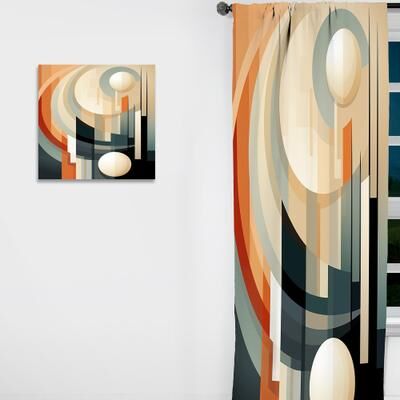
DESIGN ART "Designart ""Vanilla Vectors Abstract Shapes I"" Abstract Shapes Curtain - Blackout Abstract Curtain - 1 Panel""Bring a breath of fresh air to your windows and spruce up any space in your home with this ""Vanilla Vectors Abstract Shapes I"" Abstract Shapes 1 panel curtain. This beautiful Modern & Contemporary curtain is handmade on demand just for you."72,92 $*Shipping: 0,00 $Secure redirect to the provider
-
Can shapes converge?
Yes, shapes can converge. Convergence refers to the coming together or meeting at a point. In geometry, shapes can converge when their sides or lines intersect at a common point. For example, the sides of a triangle converge at its vertices, and the sides of a square converge at its corners. In art and design, shapes can also be arranged in a way that creates a sense of convergence, leading the viewer's eye to a focal point. **
-
What are stage shapes?
Stage shapes refer to the different configurations or layouts that a stage can take on for a performance. These shapes can include proscenium, thrust, arena, and black box stages, each with its own unique characteristics and advantages. The choice of stage shape can impact the audience experience, sightlines, acoustics, and overall atmosphere of a performance. Different types of performances may benefit from different stage shapes depending on the desired interaction between performers and audience. **
-
What are mouth shapes?
Mouth shapes refer to the different positions and movements of the lips, tongue, and jaw when producing speech sounds. These shapes are essential in forming the sounds of language and can vary depending on the specific sound being produced. By understanding and practicing different mouth shapes, individuals can improve their pronunciation and clarity when speaking. **
-
What geometric shapes are there?
There are many geometric shapes, including circles, squares, rectangles, triangles, pentagons, hexagons, octagons, and more. **
Similar search terms for Shapes
-
DESIGN ART "Designart ""Vanilla Vectors Abstract Shapes I"" Abstract Shapes Curtain - Blackout Abstract Curtain - 1 Panel""Bring a breath of fresh air to your windows and spruce up any space in your home with this ""Vanilla Vectors Abstract Shapes I"" Abstract Shapes 1 panel curtain. This beautiful Modern & Contemporary curtain is handmade on demand just for you."85,86 $*Shipping: 0,00 $Secure redirect to the provider
-
DESIGN ART "Designart ""Vanilla Vectors Abstract Shapes I"" Abstract Shapes Curtain - Blackout Abstract Curtain - 1 Panel""Bring a breath of fresh air to your windows and spruce up any space in your home with this ""Vanilla Vectors Abstract Shapes I"" Abstract Shapes 1 panel curtain. This beautiful Modern & Contemporary curtain is handmade on demand just for you."87,15 $*Shipping: 0,00 $Secure redirect to the provider
-
DESIGN ART "Designart ""Vanilla Vectors Abstract Shapes I"" Abstract Shapes Curtain - Blackout Abstract Curtain - 1 Panel""Bring a breath of fresh air to your windows and spruce up any space in your home with this ""Vanilla Vectors Abstract Shapes I"" Abstract Shapes 1 panel curtain. This beautiful Modern & Contemporary curtain is handmade on demand just for you."92,87 $*Shipping: 0,00 $Secure redirect to the provider
-
How are these shapes transformed?
These shapes are transformed through translation, rotation, and reflection. Translation involves moving the shape from one position to another without changing its size or shape. Rotation involves turning the shape around a fixed point. Reflection involves flipping the shape over a line, creating a mirror image. These transformations can be used to create different orientations and positions of the original shape. **
-
What shapes your moral values?
My moral values are shaped by a combination of my upbringing, cultural influences, personal experiences, and the teachings of my religion. The values instilled in me by my family and community have played a significant role in shaping my moral compass. Additionally, my own experiences and interactions with others have helped me develop a deeper understanding of empathy, compassion, and fairness. Finally, the teachings of my religion have provided me with a framework for understanding right and wrong, and have influenced my moral decision-making. **
-
Do electrons have different shapes?
No, electrons do not have different shapes. According to the current understanding in physics, electrons are considered to be point particles with no discernible size or shape. They are often described as having a spherical distribution of charge, but this is a mathematical abstraction rather than a physical shape. Therefore, all electrons are considered to be identical in shape. **
-
What eye shapes are there?
There are several different eye shapes, including almond, round, hooded, monolid, upturned, and downturned. Almond-shaped eyes are considered the most symmetrical and are characterized by a visible crease and a slightly upturned outer corner. Round eyes are exactly as they sound, with a circular shape and a visible iris. Hooded eyes have a heavy brow bone that partially covers the eyelid, while monolid eyes have a smooth eyelid without a crease. Upturned eyes have a slight lift at the outer corner, while downturned eyes have a slight droop at the outer corner. **
* All prices are inclusive of VAT and, if applicable, plus shipping costs. The offer information is based on the details provided by the respective shop and is updated through automated processes. Real-time updates do not occur, so deviations can occur in individual cases. ** Note: Parts of this content were created by AI.